Hey there,
Ever thought about why your text goes through, or that concert video streams smooth AF, even when you’re in the middle of downtown or a random suburb no one mapped on Google? Most people blame cell towers, but here’s the tea – the tall metal poles you see on hills and roof tops aren’t just pretty to look at (though let’s be real, some are kind of cool). They’re the backbone of cellular service, and none of that daily comms would work without something called backhaul. As a communication tower supplier, I get way too many questions about how exactly these towers tie into that whole backhaul puzzle, so let’s break it down like we’re chatting over coffee – no boring jargon, I promise. Communication Tower

First, let’s start with basics that everyone can vibe with. You know when you send a Snapchat, make a call, or scroll TikTok? Your phone doesn’t beam that data straight to your friend’s phone or a TikTok server. It hits the nearest cell site (that’s the small antenna setup on the tower, right at the top). From there, that data has to get from the tower to the rest of the network – and to the internet. That’s backhaul. If backhaul is a wobbly bridge, the cell tower is the guy holding the planks in place. No bridge, no data gets across. No data, no service. Simple as that.
Now, why do you need a tower to pull backhaul off, anyway? Couldn’t a cell just run that data straight to something? Nope, not for today’s 5G-heavy, data-hungry world. Modern cellular networks – 4G LTE, 5G, even the older 3G we still use for some calls – don’t operate on tiny, individual connections. Each tower has a range (called a “cell,” hence cell tower) of like 1-5 miles in the suburbs, way less in dense cities. Each of those cells is handling hundreds, sometimes thousands of devices at once. If you tried to run every single one of those connections directly to a core network (the big main network that connects to the internet), you’d need a million cables, and it’d be super slow. The tower acts as the local hub – that’s where all the cell traffic first gathers, then backhaul ships it off to where it needs to go. Without the tower’s physical structure holding all that backhaul gear high up and in the open, you’d have way worse range, more dropped calls, and that buffering that makes you scream into your pillow.
Let’s talk about the two main backhaul types that tie directly to our towers, since that’s what I deal with every day as a tower supplier. First, there’s wired backhaul, and second, wireless backhaul. Both rely heavily on tower infrastructure, so let’s demystify each.
Wired backhaul is the old reliable one – think fiber optic cables or copper lines. Wait, but how does the tower fit here? Well, the tower doesn’t hold the cable itself, but it’s the anchor point for all the gear that connects to it. At the base of every tower, there’s a small equipment shelter (usually weather-proof, locked down, like a tiny metal box) that houses things like routers, switches, and transceivers. If the backhaul is fiber, the fiber runs from the shelter, either underground or sometimes strung between poles, straight to the nearest central office (that’s where the network’s core lives). But if you didn’t have the tower up high, those cell site signals can’t reach the shelter? No, wait, no – the cell devices talk to the antennas on the tower, the antennas talk to the base station (that’s the gear inside the shelter), and the base station hooks up to the backhaul. The tower’s height is non-negotiable here because even wired backhaul depends on the tower’s antennas doing their job first. Let’s say you’re building a new cell site in a rural area – you can’t just put a cell antenna on a wooden utility pole. Utility poles are lower, so their range is tiny, which means you’d need way more sites, which is more expensive for carriers. A tower, on the other hand, can put antennas 100+ feet up, so they cover way more ground, which means fewer backhaul lines to run, too. Carriers love that.
Then there’s wireless backhaul, which is blowing up right now, especially for areas where running fiber is a pain (like mountains, rural towns that don’t have fiber laid yet, or even temporary sites for events like music festivals). Wireless backhaul is basically a point-to-point radio link – instead of using cables, the tower has a special backhaul antenna (different from the cell phones’ antennas, it’s way more powerful) that beams data to another antenna, usually on another tower or a central hub tower. This is where our towers really shine. Wireless backhaul needs line-of-sight, right? If there’s a tree, a hill, or a building in the way, the signal drops. Tall towers solve that line-of-sight problem instantly. When we’re installing a tower for a new carrier, one of the first things we calculate is where that tower’s backhaul antenna can point, so it has a clear shot to the next backhaul node. Last year, I worked on a job in western North Carolina where a carrier needed to cover a 20-mile stretch of mountain town that had no fiber. Putting a tower on a peak meant we could run wireless backhaul from that tower to two smaller secondary towers, no digging up mountain roads for fiber. Saved the carrier like $2 million in trenching costs, which is a big win for everyone.
Wait, let’s not sleep on the gear that lives on the tower for backhaul. A lot of people think the only stuff on a tower is the little white antennas you see – nope. For backhaul, you’ll see those big, flat, dish-shaped antennas (they’re called microwave backhaul dishes) mounted on the upper section of the tower, pointed directly at another tower’s dish. Those dishes are what send the backhaul data. They’re focused, so they don’t interfere with other signals, and they can send huge amounts of data super fast, as long as line of sight is good. For 5G, some towers also have small, panel-shaped backhaul antennas, called millimeter wave backhaul gear, which handles the super-fast 5G speeds people crave. All of this gear needs to be mounted high on the tower, away from obstacles, to keep the backhaul connection strong. If we mounted that backhaul dish on the ground, it’d be blocked by trees or other buildings, and the signal would be garbage. That’s why tower design is so important – we don’t just build a pole and leave it. We engineer the tower to hold all the cell and backhaul gear, at the right heights, pointed the right way, so the backhaul works as intended.
Let me give you a real example from a project I did last year, to make this concrete. A national carrier came to us needing to upgrade their network in Phoenix, because everyone was complaining about buffering during work from home days and football games. The old towers they had were old, short, and their backhaul was outdated copper lines that couldn’t handle the data load. We built two new lattice towers (those are the triangle-shaped metal ones, for anyone who doesn’t know) in north Phoenix. We equipped each tower with 4G LTE antennas, 5G mid-band antennas, and microwave backhaul dishes pointed at a central network hub tower 8 miles away. We ran new fiber from the tower shelters to the nearest central office, so we had both wired and wireless backhaul redundant (super important – if one backhaul line goes down, the other kicks in). The carrier reported that after the upgrade, dropped calls went down 70% and streaming speeds tripled. None of that would’ve happened without the tower – those dishes needed the height, the cell antennas needed the range, and the whole setup relied on the tower’s structure to hold it all together.
Now, let’s talk about why backhaul on towers is changing, especially with 5G. 5G is way faster than 4G, but it has a catch: high-band 5G (mmWave) has super short range, and mid-band 5G (the one that’s actually usable for most people) needs way more backhaul capacity than 4G. A single mid-band 5G cell can handle 10x more data than a 4G cell, right? So backhaul has to keep up. That means we’re building taller towers, adding more backhaul gear, and even co-locating gear on existing towers (instead of building new ones) to keep costs down. Co-location is a big part of my business, by the way – carriers don’t want to build a whole new tower if they can just add their gear to an existing one. It’s cheaper, faster, and better for the environment. For backhaul, co-locating on a tower that already has line of sight for backhaul means carriers don’t have to do expensive site surveys to find a new spot.
Wait, what about common myths? I hear this all the time: “Cell towers cause cancer” but that’s a whole other post. Another one: “Backhaul is just internet, so I don’t need a tower.” No, backhaul is the connection between the cell site and the network, which is how you get that internet on your phone. If your tower’s backhaul is weak, your cell service is garbage, no matter how fast your home internet is. Another myth: Wired backhaul is better than wireless. That’s not always true. Wireless backhaul is faster to deploy, cheaper for rural areas, and if you have good line of sight, it’s just as reliable as fiber. The key is matching the backhaul type to the area. We help carriers figure that out – we do site surveys, check for line of sight, calculate gear needs, so their backhaul works.
Let’s also touch on maintenance, because that’s part of how towers support backhaul. Backhaul gear is high up, exposed to rain, snow, wind, and extreme heat. On a tower, it’s easier to access that gear for repairs and upgrades, instead of if it was scattered across random utility poles. When a microwave backhaul dish gets knocked out by a storm, our tower techs can climb up (we have strict safety protocols, don’t worry) and fix or replace it in a few hours. If that same dish was on a utility pole in the middle of a forest, it’d take days to get to. That uptime is crucial for backhaul – if backhaul goes down for a tower, that whole cell area loses service. So the tower’s accessibility is part of supporting backhaul, too.
Now, I want to talk about why this matters to you, the person scrolling TikTok, making calls, watching Netflix. When you’re at a concert and the venue’s cell service doesn’t suck, that’s because the towers there have backhaul that can handle the crowd’s data load. When you’re on a road trip and don’t lose service in the middle of nowhere, that’s because a tower in that area has backhaul linked to a tower a few miles away, so there’s coverage. None of that happens without the tower as the middleman for backhaul. I’ve seen people get so frustrated when their service drops, and 9 times out of 10, it’s not the tower’s cell antenna – it’s a backhaul issue, like a fiber line that got cut during construction or a backhaul dish that got misaligned after a wind storm.
As a tower supplier, my job isn’t just to build poles. It’s to build infrastructure that makes backhaul work. I work with carriers, city planners, rural broadband providers, everyone who needs to get cellular data to people. We don’t cut corners on tower design because a weak tower means weak backhaul, which means bad service. Last year, we worked with a rural cooperative in Iowa that wanted to bring broadband to 10 small towns that had no cell service at all. We built 6 small towers, each with wireless backhaul linking them to a central tower 15 miles away. It took 3 months, and now those towns have 5G service, which is huge for farmers who need to check weather data, students who need to do remote school, and small business owners who need to take card payments. All of that relied on the towers holding the backhaul gear high enough to work.
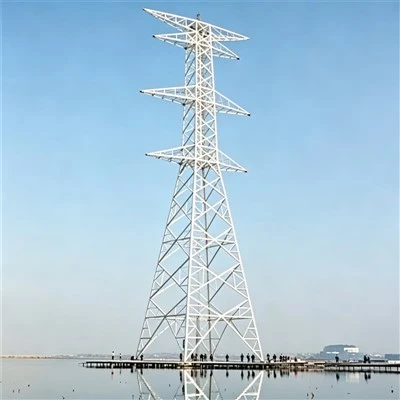
If you’re a carrier, a broadband provider, or even a city that needs to upgrade your cellular network, let’s talk. I know how confusing backhaul can be – there’s line of sight, gear specs, tower height calculations, and I can help you cut through all the noise. We build towers that are engineered specifically for your backhaul needs, whether you need wired, wireless, or a mix of both. No hidden fees, no jargon, just honest work to make sure your data gets where it needs to go.
Communication Antenna Tower References:
- "Cellular Backhaul: An Overview of Technologies and Trends", GSMA, 2022.
- "Microwave Backhaul for 5G Networks", IEEE Communications Magazine, Vol. 60, No. 3, 2022.
- "Tower Infrastructure and Cellular Network Performance", CTIA, 2021.
- "Rural Broadband Deployment: The Role of Communications Towers", Federal Communications Commission (FCC), 2023.
Qingdao Hongyuanfeng Power Equipment Co., Ltd.
Hongyuanfeng is one of the most professional communication tower manufacturers and suppliers in China, also supports customized service. Please feel free to wholesale advanced communication tower in stock here from our factory. Good service and quality products are available.
Address: No.42 Fengwu Road, Beiguan Industrial Park, Jiaozhou City
E-mail: 13808970205@163.com
WebSite: https://www.hyfsteelpod.com/
