As a supplier of textile digital printing machines, I’ve witnessed firsthand the industry’s evolution from traditional printing methods to the new era of digital printing. Understanding the differences between textile digital printing machines and traditional printing machines is crucial for businesses looking to invest in printing technology. In this blog, I will explore these differences from various aspects to help you make informed decisions. Textile Digital Printing Machine

1. Printing Technology
Traditional textile printing machines mainly rely on techniques such as screen – printing and rotary printing. Screen – printing involves creating a stencil (screen) for each color in the design. Ink is then forced through the open areas of the screen onto the fabric. Rotary printing, on the other hand, uses engraved cylinders that rotate and transfer ink onto the fabric. These methods require significant upfront setup, as each color and pattern needs a specific screen or engraved cylinder.
In contrast, textile digital printing machines use digital technology. They directly transfer digital images onto the fabric using inkjet technology. There is no need for physical screens or engraved cylinders. Design files are sent directly to the machine, and the inkjet heads precisely deposit ink droplets on the fabric based on the digital pattern. This ability to work directly from digital files makes it extremely flexible, allowing for quick design changes and customization.
2. Design Flexibility
One of the most significant differences between the two lies in design flexibility. Traditional printing is somewhat limited in terms of the complexity of designs it can handle. Creating screens for intricate or highly detailed designs is time – consuming and expensive. The color registration process can also be challenging, especially for designs with many colors. Moreover, if there are any design modifications, it may require making new screens, which is a costly and time – intensive process.
In the case of textile digital printing, the level of design flexibility is virtually unlimited. Any digital image, whether it’s a high – resolution photo, a complex illustration, or a personalized design, can be easily printed onto the fabric. Design changes can be made in real – time, with no need to create new physical components. This is especially beneficial for fashion designers, small – batch manufacturers, and businesses that offer customized products, as they can quickly respond to market trends and customer demands.
3. Production Volume and Efficiency
Traditional printing machines are generally more suitable for large – volume production. Once the initial setup (making screens or engraved cylinders) is complete, the printing process can be relatively fast. The cost per unit decreases significantly as the production volume increases. This is because the fixed costs associated with the setup are spread over a large number of units.
However, for small – volume production, traditional printing becomes less cost – effective. The setup time and costs for small batches are disproportionately high. In some cases, the setup cost may even exceed the revenue from the small – batch production.
Textile digital printing machines shine when it comes to small – batch and on – demand production. There is no need for time – consuming setup, so production can start immediately after the design is finalized. This makes them ideal for short – run production, sample making, and customized orders. Although the printing speed of digital machines may be slower than traditional machines in high – volume scenarios, the overall efficiency for small – scale production is much higher.
4. Quality of Printing
The quality of printing also varies between the two types of machines. Traditional printing can produce very high – quality prints with sharp and well – defined colors, especially for simple and bold designs. The ink is applied thickly, which can result in a more vibrant and long – lasting color on the fabric. However, for complex designs with fine details and gradients, traditional printing may struggle to achieve the same level of precision.
Textile digital printing machines can achieve extremely high – resolution prints. They are capable of reproducing fine details, smooth gradients, and complex color combinations with great accuracy. The ink is applied in tiny droplets, which allows for a more precise control of the color and pattern. Additionally, digital printing can offer better color consistency across different batches, as the digital design remains the same. However, the color vibrancy may sometimes be slightly less compared to traditional printing, depending on the type of fabric and ink used.
5. Environmental Impact
In today’s world, environmental considerations are becoming increasingly important. Traditional printing methods often generate a significant amount of waste. The production of screens and engraved cylinders involves the use of chemicals, and there is a large amount of water used in the cleaning process. Moreover, leftover ink and chemicals from the printing process can be difficult to dispose of safely.
Textile digital printing machines are more environmentally friendly. They use less water, as there is no need for extensive cleaning of screens or cylinders. The ink is used more efficiently, with less waste, as it is precisely applied to the fabric according to the digital design. Additionally, many digital inks are water – based and have lower levels of harmful chemicals, reducing the environmental impact.
6. Cost Considerations
The cost structure of traditional and digital printing machines is quite different. The initial investment in traditional printing equipment is usually very high. Screens, engraved cylinders, and the printing machines themselves are expensive to purchase and maintain. There are also ongoing costs for screen and cylinder production, storage, and replacement.
For textile digital printing machines, the initial investment can also be substantial, but it may be more accessible for small and medium – sized enterprises. The cost savings come in the form of reduced setup costs, lower waste management costs, and the ability to produce small – batch orders profitably. Over time, as the demand for customization and small – batch production increases, the cost – effectiveness of digital printing machines becomes more apparent.
7. Maintenance and Technical Requirements
Traditional printing machines are relatively complex in terms of maintenance. The screens and engraved cylinders need to be carefully stored and maintained to ensure their longevity. The printing machines themselves require regular calibration and cleaning to maintain optimal performance. Skilled technicians are often needed to operate and maintain these machines, which can add to the overall cost.
Textile digital printing machines also require proper maintenance, but the process is generally simpler. The main components that need attention are the inkjet heads, which need to be kept clean and free from clogging. Software updates are also important to ensure the machine can take advantage of the latest features. Since digital technology is more widespread, it may be easier to find technicians with the necessary skills to maintain and troubleshoot these machines.
Conclusion
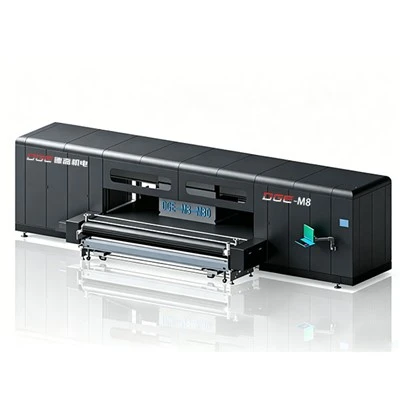
In conclusion, textile digital printing machines and traditional printing machines have their own unique advantages and disadvantages. Traditional printing machines are still a great choice for large – volume, simple – design production, where the focus is on high – speed output and cost – efficiency for large batches. On the other hand, textile digital printing machines offer unparalleled design flexibility, suitability for small – batch and on – demand production, high – resolution printing, environmental friendliness, and easier maintenance.
Thick Fabrics Digital Printing Machine As the market continues to evolve towards more customized and sustainable products, the demand for textile digital printing machines is likely to increase. If you are a business owner, fashion designer, or textile manufacturer looking to upgrade your printing capabilities, consider the differences outlined in this blog. I encourage you to contact us to discuss how our textile digital printing machines can meet your specific needs. Whether you are starting a new venture or looking to expand your existing operations, our team of experts can provide you with professional advice and support.
References
- "Textile Printing: Principles, Processes, and Practice" by Shukri R. Fakhouri and Suhail K. Natt.
- Industry reports from textile machinery associations on the development and trends of printing technologies.
- Research papers on environmental impact assessment of textile printing methods.
Degao Machinery
As one of the most professional textile digital printing machine manufacturers and suppliers in China, we offer a wide range of products with superior quality. Welcome to buy premium textile digital printing machine made in China here and get pricelist from our factory. Good service and reasonable price are available.
Address: No. 29, Jingxia Road, Gaoling District, Xi’an City, Shaanxi Province, China
E-mail: master@xadegao.com
WebSite: https://www.textileprintingmachines.com/
