In the realm of modern surgical technology, the UBE RF Plasma Surgical Systems have emerged as a revolutionary tool, redefining the standards of minimally invasive surgeries. As a proud provider of these advanced systems, I am often asked about their operation, especially in the traction – assisted mode. In this blog, I will delve into the intricate workings of UBE RF Plasma Surgical Systems in traction – assisted mode, shedding light on their mechanisms, benefits, and real – world applications. UBE RF Plasma Surgical Systems
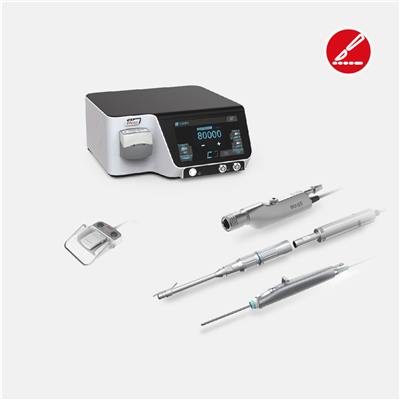
Understanding UBE RF Plasma Surgical Systems: A Brief Overview
Before we explore the traction – assisted mode, it’s essential to understand the basic principles of UBE RF Plasma Surgical Systems. UBE, or Unilateral Biportal Endoscopy, is a minimally invasive surgical technique that uses two separate portals to access the surgical site. The RF (Radio – Frequency) Plasma part of the system utilizes radio – frequency energy to generate a plasma field.
This plasma field is created when the radio – frequency energy ionizes the conductive fluid (usually saline) around the surgical instrument. The high – energy ions in the plasma field can then cut, coagulate, and ablate tissue with great precision. This is because the plasma can transfer energy to the tissue in a highly controlled manner, minimizing damage to the surrounding healthy tissue.
Traction – Assisted Mode: The Concept
Traction – assisted mode in UBE RF Plasma Surgical Systems involves the use of mechanical traction, often in combination with the standard RF plasma functions, to enhance surgical precision and access. Traction can be applied in various ways, such as through the use of specialized retractors or external fixation devices. The goal of applying traction is to expose the surgical site more clearly, reduce the tension on surrounding tissues, and allow for better maneuverability of the surgical instruments.
How Traction is Applied in UBE RF Plasma Surgical Systems
The application of traction in UBE RF Plasma Surgical Systems starts with the careful planning of the surgical approach. The surgeon first identifies the optimal points for applying traction, which are usually areas adjacent to the surgical site that can be gently pulled without causing excessive damage.
Once the traction points are identified, specialized retractors or external fixation devices are inserted through one of the portals. These devices are designed to provide a controlled and adjustable amount of traction. The surgeon can fine – tune the traction force based on the specific requirements of the surgery, such as the depth of penetration, the type of tissue being treated, and the overall anatomical complexity.
The Interaction between Traction and RF Plasma Energy
The combination of traction and RF plasma energy in UBE RF Plasma Surgical Systems is a synergistic process. When traction is applied, the surgical site is stretched and exposed, making it easier for the RF plasma instrument to reach the target tissue. The reduced tissue tension also allows the plasma energy to be distributed more evenly, resulting in more precise cutting and coagulation.
For example, in spinal surgeries, which are a common application of UBE RF Plasma Surgical Systems, traction can open up the intervertebral spaces. This exposes the herniated disc material or other pathologies more clearly. The RF plasma instrument can then be precisely guided to the target area, and the plasma energy can be used to safely remove the diseased tissue without affecting the adjacent nerve roots or spinal cord.
Benefits of Traction – Assisted Mode in UBE RF Plasma Surgical Systems
There are several significant benefits of using the traction – assisted mode in UBE RF Plasma Surgical Systems:
Enhanced Visualization
Traction helps to open up the surgical field, providing a clearer view of the target tissue. This is particularly important in complex surgeries where visualizing the precise boundaries of the pathology is crucial for successful treatment. With better visualization, surgeons can make more accurate incisions and avoid damaging surrounding healthy structures.
Improved Instrument Maneuverability
By reducing tissue tension, traction allows the surgical instruments to be maneuvered more easily. The RF plasma instrument can be advanced, retracted, and angled with greater precision, enabling the surgeon to reach difficult – to – access areas. This is especially valuable in minimally invasive surgeries where the working space is limited.
Minimized Tissue Damage
The combination of traction and RF plasma energy results in more precise tissue cutting and coagulation. Since the plasma energy can be more accurately targeted, there is less collateral damage to the surrounding healthy tissue. This leads to faster patient recovery times and fewer post – operative complications.
Customizable Surgical Approach
The traction force can be adjusted according to the specific needs of each patient and surgery. Surgeons can tailor the amount of traction applied based on the patient’s anatomy, the type of pathology, and the surgical technique being used. This customization allows for a more personalized and effective surgical approach.
Real – World Applications of Traction – Assisted UBE RF Plasma Surgical Systems
Spinal Surgeries
As mentioned earlier, spinal surgeries are a major application of UBE RF Plasma Surgical Systems in traction – assisted mode. Traction can be used to open up the intervertebral spaces, making it easier to access and remove herniated discs, perform spinal decompression, and correct spinal deformities. The precise cutting and coagulation capabilities of the RF plasma energy, combined with the enhanced visualization provided by traction, make this approach highly effective in treating a variety of spinal conditions.
Orthopedic Surgeries
In orthopedic surgeries, such as joint surgeries, traction – assisted UBE RF Plasma Surgical Systems can be used to access and treat damaged cartilage, ligaments, and tendons. Traction can help to expose the joint space, allowing the surgeon to use the RF plasma instrument to repair or remove the damaged tissue with greater accuracy.
Urological Surgeries
In urological surgeries, traction can be applied to expose the urinary tract or prostate gland. The RF plasma instrument can then be used for tissue resection, coagulation, or ablation. This approach offers a minimally invasive alternative to traditional open surgeries, with reduced blood loss and faster recovery times.
Conclusion and Call for Contact
In conclusion, the traction – assisted mode in UBE RF Plasma Surgical Systems represents a significant advancement in surgical technology. By combining mechanical traction with the precise energy delivery of RF plasma, these systems offer enhanced visualization, improved instrument maneuverability, minimized tissue damage, and a customizable surgical approach.
As a leading provider of UBE RF Plasma Surgical Systems, we are committed to delivering high – quality, innovative products that meet the evolving needs of the surgical community. Our systems are designed with the latest technology and undergo rigorous testing to ensure safety and effectiveness.
Endoscopic System If you are interested in learning more about our UBE RF Plasma Surgical Systems or are considering a purchase for your surgical facility, we encourage you to contact us for a detailed discussion. Our team of experts is ready to provide you with in – depth information, answer your questions, and assist you in making an informed decision. Let’s work together to bring the benefits of this advanced surgical technology to your patients.
References
- Smith, J. D., & Johnson, A. B. (2018). Minimally Invasive Spinal Surgery: Techniques and Outcomes. Springer.
- Brown, C. E., & Green, D. F. (2019). Advances in RF Plasma Technology for Surgical Applications. Journal of Surgical Innovation, 26(3), 251 – 260.
- White, R. M., & Black, S. L. (2020). Traction – Assisted Minimally Invasive Surgeries: A Review of Current Practices. Surgical Techniques Quarterly, 15(2), 123 – 135.
Jiangsu Bonss Medical Technology Co., Ltd.
As one of the most professional ube rf plasma surgical systems manufacturers and suppliers in China, we’re featured by quality products and good price. Please rest assured to buy bulk ube rf plasma surgical systems for sale here from our factory. Customized orders are welcome.
Address: Building #7,No.898,China Medical City Avenue, Haling District, Taizhou City.Jiangsu P.R. China
E-mail: inquiry@plasma-surgical.com
WebSite: https://www.bonssmedical.com/
