If you’ve ever stood beside a tractor truck idling at a cross-country loading dock, its diesel engine rumbling steady as the driver jots down delivery logs, you know these trucks aren’t just metal on wheels—they’re the backbone of freight that moves our towns, cities, and everything in between. As a tractor truck supplier, I spend a lot of time talking to fleet managers, owner-operators, and small business owners who ask the same question: “What’s the real maintenance cost of a tractor truck?” It’s not a number I can spit out from a spec sheet; it’s a balance of miles driven, load weight, driver habits, and even how often you schedule that 5-minute check you’ll “get to later.” Let’s break this down like we do with every customer who walks through our lot, no fine print, no inflated estimates, just what’s actually hitting your monthly bank account. Tractor Truck

First, let’s get one thing straight: maintenance costs for tractor trucks aren’t one-size-fits-all. A 2019 Peterbilt 579 that hauls 40,000 lbs of refrigerated produce across the Great Plains will have very different needs than a 2024 Kenworth T680 that pulls a flatbed of construction materials between Midwestern job sites. That’s why we start every customer conversation with three key variables that shape costs: average annual mileage, duty cycle (whether you’re hauling light loads short distances or heavy loads cross-country), and whether you’re buying new or pre-owned. For new tractor trucks, our data shows average annual maintenance costs land between $15,000 and $25,000 in the first five years, but that jumps to $30,000 to $50,000 for pre-owned trucks over 500,000 miles—mostly because those older units often need more frequent, specialized repairs.
Let’s start with the biggest expense that sneaks up on almost every new operator: preventive maintenance. This isn’t the stuff you put off because you’re chasing a delivery deadline; it’s the scheduled service that keeps your truck from breaking down on a remote highway, costing you thousands in lost revenue. At our dealership, we work with the North American Council for Freight Efficiency (NACFE) to set realistic preventive maintenance schedules, and most fleet managers follow these to the letter. For new diesel tractor trucks, preventive maintenance includes oil and filter changes every 25,000 to 30,000 miles (about $400 to $600 per service, depending on oil type), fuel filter changes every 50,000 miles ($200 to $350), and air filter changes every 100,000 miles ($150 to $250). Then there’s the big one: brake and tire service. Tractor trucks do 90% of their stopping work on the steer axle and drive axles, right? So brake pad and rotor replacements run $800 to $1,200 per axle, every 100,000 to 120,000 miles. Tires? Oh, tires are a whole separate line item. A set of drive tires for a Class 8 tractor runs $800 to $1,200 each, and steer tires are $500 to $700 each. With 18 wheels total on a typical tractor-trailer, replacing all tires every 150,000 to 200,000 miles costs anywhere from $6,000 to $10,000—plus another $3,000 to $5,000 for trailer tires. If you haul heavy loads or drive on rough back roads, that tire lifespan drops by 30% or more, so add another $2,000 to $4,000 a year for replacements.
Preventive maintenance is the guardrail for your repair costs, but unexpected repairs are where things get tricky, and they’re the reason I always tell customers to set aside a contingency fund. Last year, we had a customer who bought a 3-year-old Freightliner Cascadia to use for local deliveries, thinking he’d save on maintenance by skipping the extra service. Six months later, his engine seized up because he missed a required oil change. The repair cost $12,000—more than the truck’s down payment. That’s the kind of mistake that keeps me up at night, which is why we walk every customer through the most common unexpected repairs. The biggest one is the diesel particulate filter (DPF) and exhaust after-treatment system. Modern tractor trucks need this to meet emissions standards, and if you do a lot of short trips (less than 20 minutes at a time), the DPF clogs. Cleaning a clogged DPF runs $1,500 to $3,000, and replacing it entirely is $5,000 to $8,000. Then there’s the transmission. Manual transmissions for heavy-duty trucks last 500,000 to 700,000 miles, but automated manual transmissions (AMTs) which most new operators use now, can have issues with shift actuators and control modules. Replacing a transmission actuator runs $2,500 to $4,000, and a full transmission replacement is $8,000 to $12,000. Electrical system repairs are another hidden cost: new trucks have dozens of sensors, wiring harnesses, and electronic control units (ECUs). A faulty temperature sensor or wiring harness can take 4 to 8 hours to diagnose and repair, at a shop rate of $120 to $150 an hour—so a small electrical fix can easily turn into a $500 to $1,500 bill. For older pre-owned trucks, suspension and steering components are even more likely to fail: ball joints, tie rods, and leaf spring bushings need replacement every 100,000 to 150,000 miles, costing $1,000 to $2,000 per axle.
Now, let’s talk about things that aren’t parts or labor, but still count as maintenance costs: downtime and compliance. If your truck breaks down on the road, you’re not just paying for the repair—you’re losing revenue from that missed delivery, and possibly paying late fees or demurrage charges. A 2023 study from the American Trucking Associations (ATA) found that the average cost of a tractor truck downtime day is $450, which includes lost freight revenue, fuel wasted idling for repairs, and rental fees for a replacement truck. For a long-haul operator who does 120,000 miles a year, that adds up to $2,700 a year if they have 6 days of downtime. Then there’s compliance, which is non-negotiable. Federal and state regulations require regular inspections: the Annual Highway Vehicle Inspection is $100 to $150 per truck, and if you add a pre-trip and post-trip inspection program for your drivers, that’s another $500 to $1,000 a year per driver (though some companies fold that into operational costs). We also work with customers to recommend telematics systems, which track engine health, idle time, and driving habits. A good telematics system runs $20 to $50 a month per truck, but it pays for itself by reducing unnecessary idling and catching small issues before they become big repairs. One of our fleet customers reported a 18% drop in maintenance costs after installing telematics in their 20-truck fleet last year—no surprise there.
Wait, did I mention idling? Idling is a huge, often overlooked maintenance cost. Newer diesel trucks idle at 600 to 800 RPM, and idling for 1 hour uses 0.8 to 1.2 gallons of fuel, so that’s $3 to $5 an hour just for fuel. But it’s worse for the engine: idling for long periods leads to soot buildup in the engine and DPF, reduces engine lifespan, and increases wear on bearings and pistons. The NACFE says that idling for more than 4 hours a day cuts engine life by 20%, so that means replacing an engine 100,000 miles earlier than necessary. For a truck that costs $100,000 new, that’s a $20,000 hit to your total cost of ownership. We always recommend our customers install auxiliary power units (APUs) for sleeper cabs, which reduce idling to just a few minutes a day for heating and cooling, saving both fuel and engine wear. APUs cost $3,000 to $6,000 upfront, but the average payback period is 12 to 18 months, and they lower maintenance costs long-term.
Let’s put this all together with a real example from our customer data. Last year, we sold a new 2024 International LT625 to an owner-operator named Jake, who runs local deliveries in Texas, averaging 80,000 miles a year. Here’s what his maintenance budget looks like, based on our service records: preventive maintenance: $9,200 a year (oil changes, filters, brakes, minor tire replacements), unexpected repairs: $3,800 a year (most were small electrical fixes and a DPF cleaning after he adjusted his idling habits), downtime costs: $1,800 a year from two 3-day breakdowns, compliance and telematics: $1,200 a year. Total annual maintenance cost: $16,000, which works out to $0.20 per mile. That’s for a new truck, good driving habits, and a moderate duty cycle. Now compare that to a pre-owned 2018 Peterbilt 579 that a construction company bought for heavy hauling, averaging 150,000 miles a year. Their maintenance costs were $42,000 a year, or $0.28 per mile—mostly from more frequent tire replacements, transmission repairs, and DPF clogs from short runs. That’s a $6,000 difference a year, just for choosing a newer, properly maintained truck.
I know what some of you are thinking: “That still sounds like a lot. Can I save money by doing maintenance myself?” The short answer is: yes, but only if you have the training and tools. Basic stuff like oil changes and air filter replacements can be done in your own shop, saving you $100 to $200 per service. But complex repairs like DPF cleaning, transmission work, or electrical diagnostics need specialized training and OEM (original equipment manufacturer) parts. Using aftermarket parts for critical systems can save you 20 to 30% upfront, but they often fail faster and can void your warranty, which costs thousands if you have a major engine or transmission issue. Our dealership offers flexible service plans—we have a maintenance package for owner-operators that locks in a flat rate for all scheduled service, and we can handle after-hours repairs at a discounted rate for emergency breakdowns. We also work with local independent shops for customers who prefer not to use the dealership, so you’re not stuck paying premium dealership prices for basic service.
One thing I always emphasize to customers is that maintenance costs are an investment, not an expense. A well-maintained tractor truck will have a higher resale value, fewer breakdowns, and a longer lifespan. The average Class 8 tractor truck lasts 10 to 15 years, but we’ve seen trucks that hit 1 million miles with only major engine work because their owners stuck to the preventive schedule. Last year, we had a customer trade in a 2015 Kenworth T680 with 1.2 million miles on it, and we paid him $22,000 for it—because the maintenance records were perfect, and it still ran like new. If he’d skipped maintenance, that truck would have been worth half that, and he would have had to buy a new truck years earlier.
If you’re in the market for a new or pre-owned tractor truck, I can’t stress enough that understanding maintenance costs should be a core part of your buying decision, not an afterthought. Too many people just look at the upfront price of the truck and don’t factor in the thousands they’ll spend on repairs down the line. As a supplier, our job isn’t just to sell you a truck—it’s to help you find one that fits your route, load type, and budget, so you don’t end up with a lemon that eats into your profits. We’ll walk you through our real-world maintenance data, connect you with trusted service providers, and even help you build a customized maintenance plan that works for your business. There’s no one-size-fits-all number for tractor truck maintenance costs, but if you plan for preventive service, account for unexpected repairs, and choose the right truck for your duty cycle, you’ll stay on the road, meet your delivery deadlines, and keep your business moving.
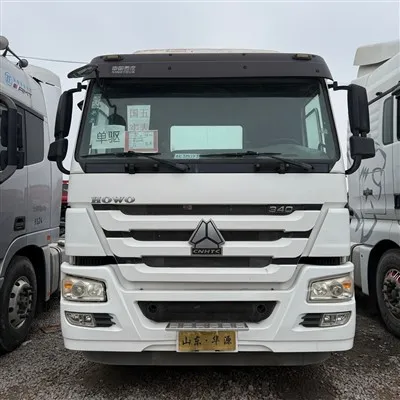
If you’re ready to discuss your specific needs, whether you’re a first-time owner-operator, a small fleet, or a large logistics company, we’re here to help. We can provide tailored maintenance estimates, go over our current inventory of new and pre-owned tractor trucks, and answer all your questions about long-term cost of ownership. Don’t let maintenance costs catch you off guard—reach out today to start a conversation that will help you make the best choice for your business.
Dump Trailer References
American Trucking Associations. (2023). Heavy-Duty Truck Maintenance and Downtime Costs Report.
North American Council for Freight Efficiency (NACFE). (2022). Preventive Maintenance Best Practices for Class 8 Tractor Trucks.
Truck Industry Association. (2023). Class 8 Tractor Truck Total Cost of Ownership Analysis.
Shandong Huayuanda Automobile Manufacturing Co., Ltd.
As one of the most experienced tractor truck manufacturers and suppliers in China, our products have good reputation in the market. We warmly welcome you to buy high quality tractor truck at low price from our factory. If you have any enquiry about cooperation, please feel free to email us.
Address: Industrial Park, Quanpu Town, Liangshan County, Jining City, Shandong Province
E-mail: Huayuanda2024@163.com
WebSite: https://www.hydtrailer.com/
