Hey everyone, Sarah here from the plastic fasteners team that works closely with car manufacturers every single day. I get tons of DMs and emails from people who’re new to the auto parts game—mostly small repair shops, DIY car lovers, and sometimes even other suppliers who just don’t get how wild the plastic fastener world is. The question I get asked most lately? “Do plastic fasteners for cars have a uniform shape?” Let’s cut to the chase: the short answer is no, and the long answer? It’s way more nuanced than you’d think, and it ties directly to why we do what we do as a supplier. Plastic Fasteners for Cars
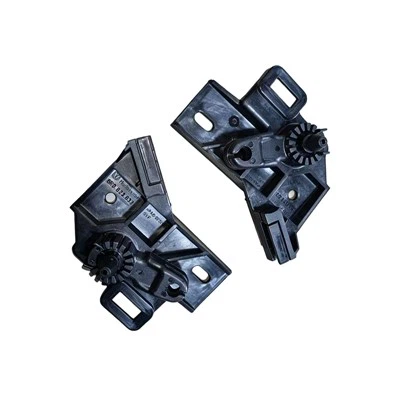
Let’s start with why plastic fasteners even matter. If you’ve ever replaced a car’s bumper trim, snapped a new door panel back into place, or fixed a loose interior grab handle, you’ve used one. These little parts hold together everything from the exterior body panels to the under-hood wiring looms, and they’re way cheaper and lighter than metal fasteners. But back to the shape thing. When I first started in this industry five years ago, I assumed all plastic clips were basically the same—just different sizes of round, stemmed things. Spoiler: I was so wrong.
Cars aren’t made from a single mold, right? A Toyota Corolla from 2010 doesn’t have the same body panel layout as a 2024 Tesla Model 3, and definitely not the same as a European Volkswagen Golf. Even within the same model year, different trim levels might have different fasteners. A base sedan’s rear bumper is held on with different clips than a hybrid version’s, because the hybrid has extra battery casing that shifts the mounting points. That’s the first big reason shapes aren’t uniform: each car model is engineered with unique mounting specs, and fasteners have to match those exact specs to hold up to vibration, temperature changes, and road debris.
But it’s not just car models. Think about where the fastener is going on the car. A fastener that holds a windshield wiper cowl (that plastic panel under your windshield) has to be flexible enough to absorb small impacts from leaves or snow, so it’s usually a one-piece push-in clip with a slightly flared base that spreads pressure evenly. A fastener that holds a under-hood fuse box has to be heat-resistant, so it’s often a screw-on plastic fastener with a wider flange that won’t warp in 200-degree engine bay heat. And a fastener that holds a side skirt? It has to clip in and out easily for quick repairs, so it’s a snap-in design with locking tabs that don’t require tools. All of these have totally different shapes—even if they look similar at first glance.
Here’s where a lot of small suppliers drop the ball, and where we’ve built our name. A lot of cut-rate fastener manufacturers will make “one-size-fits-all” clips, claiming they work for 10 different car models. But those clips often break within a year, or don’t hold the panel tight, leading to rattles or even panels falling off at highway speeds. We had a client last year, a small repair shop in Detroit, who came to us because they’d been buying cheap bulk clips online. They said half the clips they used for Ford F-150 door panels wouldn’t fit right—some were too small, some were too big, and when they pulled the old clips out, the replacement ones just snapped. Turns out the cheap supplier had cranked out a generic clip that fit a dozen Ford models but none of them perfectly. We sent them our custom-fit clips for the F-150’s exact door panel mount, and they came back a week later saying they hadn’t had a single broken clip since. That’s the reality of non-uniform shapes: you can’t cut corners on matching the exact design for each application.
Another thing that’s not talked about enough is material-driven shape differences. The plastic used for fasteners varies too—PA66 with glass fiber for heat resistance, polypropylene for flexibility, even specialty blends for electric vehicles. The material affects the shape, because a stiffer plastic needs a thicker stem to withstand vibration, while a more flexible plastic can have a thinner, more delicate shape for tight spaces. For example, EVs have a lot more plastic components because of weight savings for range—their fasteners have to be smaller but stronger, since EV body panels are often made of lightweight composite materials that don’t hold up to the same pressure as steel panels. So an EV’s bumper fastener is shaped like a tiny, reinforced spring clip, while a gas-powered car’s bumper clip is a larger, more solid push-in design.
I know what some of you are thinking: “But auto parts suppliers use standards, right? Like ISO or SAE?” Yeah, there are general size standards for things like clip diameter and length, but even those leave room for model-specific tweaks. For example, an SAE-standard 10mm push-in clip is a base size, but a Honda Civic’s 10mm clip has a different locking tab angle than a Honda Accord’s 10mm clip, because the Accord’s door panel has a thicker mounting hole. If you mix those up, the clip won’t lock in, and the panel will wiggle loose. We keep a catalog of over 12,000 different fastener designs, sorted by car make, model, year, and even the exact part they’re holding. That’s not overkill—that’s what it takes to make sure a fastener actually works when someone is trying to fix their car.
Let me address a common myth I see online: some DIY car lovers swear by “universal” clips, saying they’ve used them for years without issues. Sure, for small, low-stress parts like interior trim pieces under the dash, a universal clip might work. But for anything structural—bumper mounts, underbody panels, wheel wells—universal clips are a risk. A friend of mine is a mechanic in Chicago, and he’s seen three accidents in the last two years where a universal bumper clip failed, causing a bumper to come loose and hit another car. That’s not a problem with fasteners in general—that’s a problem with trying to use a one-shape-fits-all part for a job that needs a specific shape.
So what does this mean for someone who needs car plastic fasteners? If you’re a repair shop, a parts retailer, or even a weekend warrior fixing your own car, the worst thing you can do is buy bulk generic clips. They might save you a few bucks upfront, but you’ll end up wasting time and money on broken clips, or even worse, repairs from failed fasteners. At our team, we don’t just sell fasteners—we help people find the exact shape they need for their specific application. We work with repair shops to build custom clip kits for their most common car models, so they don’t have to dig through a pile of 50 different clips to find the right one. We also work with small car manufacturers who are building custom models and need fasteners tailored to their unique designs.
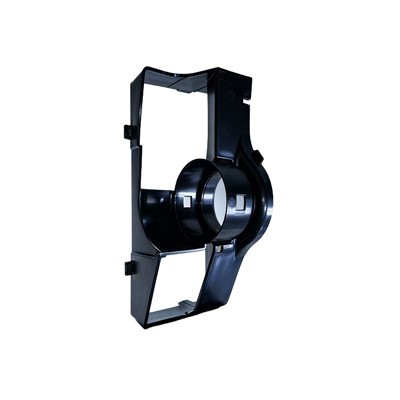
I get that it’s easy to think these little plastic parts are interchangeable, but after five years in this industry, I can tell you they’re not. Every shape is engineered for a reason: to hold a specific part, in a specific spot, on a specific car, for the long haul. The next time you pop off a car panel to fix a light or replace a speaker, take a look at the old clip—notice the little locking tabs, the flange size, the stem length. That clip isn’t random. It’s a specific shape designed for that exact job.
Plastic Front and Rear Exterior Parts If you’re tired of dealing with cheap, ill-fitting plastic fasteners that break too easily, or you need help finding the right clips for your line of work, hit us up. We’re here to help you get the exact fasteners you need, no generic nonsense, no confusing catalogs, just parts that work when you need them.
References
- Society of Automotive Engineers (SAE). "Standard Practice for Plastic Fasteners for Automotive Applications." SAE International, 2022.
- Automotive Industries Association. "Lightweighting in Electric Vehicles: Fastener Design Considerations." AIA Technical Report, 2023.
- Plastics Industry Association. "Performance Characteristics of Automotive-Grade Plastic Fasteners." PIA Engineering Bulletin, 2021.
- International Organization for Standardization (ISO). "Automotive Parts Mounting Components – Plastic Fasteners." ISO 15552:2020.
- Automotive Repair Association. "Common Fastener Failures in Aftermarket Car Repairs." ARA Best Practices Guide, 2022.
Ningbo Xiaohua Plastic Industry Co., Ltd.
We are one of the most experienced plastic fasteners for cars manufacturers and suppliers in China, specialized in providing high quality customized service to global clients. We warmly welcome you to wholesale durable plastic fasteners for cars in stock here from our factory.
Address: No. 878, Gulin Section, Yinxian Avenue, Haishu District, Ningbo City, Zhejiang Province
E-mail: 13736009355@163.com
WebSite: https://www.cnxiaohua.com/
