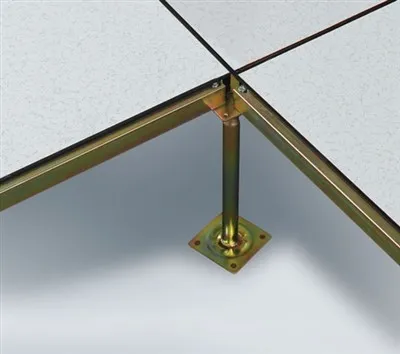
In the modern technological landscape, the demand for anti – static raised access floors has grown exponentially. As a supplier in this industry, I’ve witnessed firsthand the importance of these floors in various settings, from data centers to laboratories. Different brands of raised access floors offer a wide range of anti – static performance levels, and understanding these differences is crucial for making an informed purchasing decision. Anti Static Raised Access Floor
The Science Behind Anti – Static Flooring
Before delving into the anti – static performance of different brands, it’s essential to understand the basic science of anti – static materials. Static electricity is generated when two materials come into contact and then separate, causing an imbalance of electric charges. In an environment where sensitive electronic equipment is present, static electricity can be extremely harmful. It can cause malfunctions, data loss, and even permanent damage to electronic components.
Anti – static raised access floors are designed to dissipate static electricity safely. They typically achieve this through the use of conductive or static – dissipative materials. Conductive materials allow the rapid transfer of electric charges, while static – dissipative materials slow down the flow of charges, reducing the risk of electrostatic discharge (ESD).
Measuring Anti – Static Performance
There are several key parameters used to measure the anti – static performance of raised access floors. One of the most important is surface resistivity. Surface resistivity is a measure of how easily an electric current can flow across the surface of the floor. A lower surface resistivity indicates better anti – static performance, as it allows for faster dissipation of static charges.
Another important parameter is volume resistivity, which measures the ability of the entire floor material to conduct electricity. Similar to surface resistivity, a lower volume resistivity is generally better for anti – static purposes.
In addition to resistivity, the charge generation and decay time are also important factors. Charge generation refers to the amount of static electricity that is generated when a person walks on the floor or when equipment is moved across it. A good anti – static floor should minimize charge generation. The decay time is the time it takes for the static charge to dissipate to a safe level. A shorter decay time means that static charges are removed more quickly, reducing the risk of ESD.
Anti – Static Performance of Different Brands
Brand A
Brand A is known for its high – end raised access floors. Their floors are made from a combination of conductive materials and advanced polymers. In terms of surface resistivity, Brand A’s floors typically measure in the range of 10^4 to 10^6 ohms per square. This low surface resistivity allows for rapid dissipation of static charges, making them suitable for environments with extremely sensitive electronic equipment, such as semiconductor manufacturing facilities.
The volume resistivity of Brand A’s floors is also very low, which means that the entire floor structure can effectively conduct electricity. Their charge generation is minimal, and the decay time is extremely short, usually within a few milliseconds. This ensures that any static charges generated in the environment are quickly and safely removed.
Brand B
Brand B offers a more cost – effective solution for anti – static raised access floors. Their floors are made from static – dissipative materials that are less expensive than the conductive materials used by Brand A. The surface resistivity of Brand B’s floors is typically in the range of 10^6 to 10^9 ohms per square. While this is higher than Brand A’s floors, it is still within the acceptable range for most general – purpose data centers and office environments.
The volume resistivity of Brand B’s floors is also relatively high compared to Brand A, but it still provides adequate anti – static protection. The charge generation is slightly higher than Brand A, and the decay time is a bit longer, usually within 10 to 100 milliseconds. However, for applications where the sensitivity of the electronic equipment is not extremely high, Brand B’s floors offer a good balance between cost and performance.
Brand C
Brand C focuses on providing environmentally friendly anti – static raised access floors. Their floors are made from recycled materials that are treated to have anti – static properties. The surface resistivity of Brand C’s floors is in the range of 10^7 to 10^10 ohms per square. This relatively high surface resistivity means that they are more suitable for less sensitive environments, such as educational institutions and some light industrial applications.
The volume resistivity of Brand C’s floors is also on the higher side, and the charge generation is moderate. The decay time can be up to a few seconds, which is longer than the other two brands. However, for applications where the risk of ESD is not a major concern, Brand C’s environmentally friendly option can be a good choice.
Factors Affecting Anti – Static Performance
In addition to the brand and the materials used, there are several other factors that can affect the anti – static performance of raised access floors. One of the most important factors is the installation process. If the floor is not installed correctly, there may be gaps or uneven surfaces that can disrupt the flow of electric charges, reducing the anti – static performance.
The environmental conditions also play a significant role. Humidity levels can have a major impact on static electricity. In a dry environment, static charges are more likely to build up, while in a humid environment, the moisture in the air can help to dissipate static charges more easily. Therefore, the anti – static performance of the floor may vary depending on the humidity levels in the installation area.
The maintenance of the floor is another crucial factor. Regular cleaning and inspection are necessary to ensure that the anti – static properties of the floor are maintained. If the floor is contaminated with dirt, dust, or other substances, it can affect the conductivity of the floor material and reduce its anti – static performance.
Choosing the Right Brand for Your Needs
When choosing a brand of anti – static raised access floors, it’s important to consider your specific needs. If you are operating a high – tech data center or a semiconductor manufacturing facility, where the sensitivity of the electronic equipment is extremely high, Brand A may be the best choice. Their high – performance floors can provide the maximum protection against ESD.
For general – purpose data centers and office environments, where cost is a concern but still require adequate anti – static protection, Brand B can be a suitable option. Their floors offer a good balance between performance and affordability.
If environmental friendliness is your top priority, and the sensitivity of the electronic equipment is relatively low, Brand C’s environmentally friendly floors may be the right choice for you.
Conclusion
As a supplier of anti – static raised access floors, I understand the importance of choosing the right floor for your specific application. Different brands offer different levels of anti – static performance, and it’s crucial to consider factors such as surface resistivity, volume resistivity, charge generation, and decay time. By understanding these factors and your specific needs, you can make an informed decision and choose the brand of raised access floors that will provide the best protection for your electronic equipment.
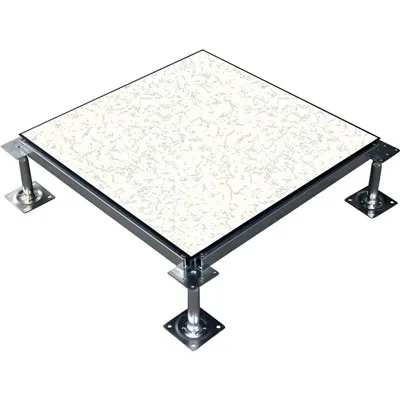
Raised Floor If you are in the market for anti – static raised access floors and would like to discuss your requirements further, I encourage you to reach out to me. We can have a detailed discussion about your needs, and I can provide you with more information about the different brands and products we offer. Let’s work together to find the perfect solution for your anti – static flooring needs.
References
- ASTM International. (2018). Standard Test Methods for Electrical Resistivity of Conductive and Static – Dissipative Surfaces. ASTM D257 – 14.
- Electrostatic Discharge Association. (2014). ESD Association Standard for the Protection of Electrostatic – Discharge – Sensitive Items. ANSI/ESD S20.20 – 2014.
- International Electrotechnical Commission. (2016). IEC 61340 – 5 – 1:2016. Electrostatics – Part 5 – 1: Protection of electronic devices from electrostatic phenomena – General requirements.
Fineco Tech Co., Ltd.
As one of the most professional anti static raised access floor manufacturers and suppliers in China, we’re featured by quality products and good service. Welcome to wholesale customized anti static raised access floor made in China here from our factory. If you have any enquiry about cooperation, please feel free to email us.
Address: Wuyue Square, Wujin District, Changzhou, Jiangsu, China
E-mail: info@finecotech.com
WebSite: https://www.finecoglobal.com/
